The Zodiac Through Time: How Astrology Has Changed Over the Centuries
Astrology has been a part of human culture for thousands of years, offering guidance, insight, and a way to understand the connection between the heavens and life on Earth. The concept of the zodiac, with its twelve familiar signs, has traveled across civilizations and eras, evolving to reflect cultural beliefs, scientific discoveries, and shifting perspectives on fate and personality.
Article Sponsored By: Parking Lot Striping Wichita Falls
While the core idea of astrology—the belief that celestial movements influence human life—has remained, its interpretation and practice have transformed dramatically over time.
Understanding the history of the zodiac is not only a glimpse into astrology’s past but also a reflection of how human beings have sought meaning in the stars. From its origins in ancient Mesopotamia to the personalized horoscopes of the digital age, astrology’s journey reveals how an ancient system has adapted to stay relevant in an ever-changing world.
The Birth of the Zodiac in Ancient Mesopotamia
The earliest roots of astrology can be traced back to Mesopotamia around 2,000 BCE. Babylonian astronomer-priests studied the heavens and documented the regular paths of the Sun, Moon, and planets across the sky. From these observations, they developed a system of constellations along the ecliptic—the path of the Sun—which eventually became the foundation of the zodiac.
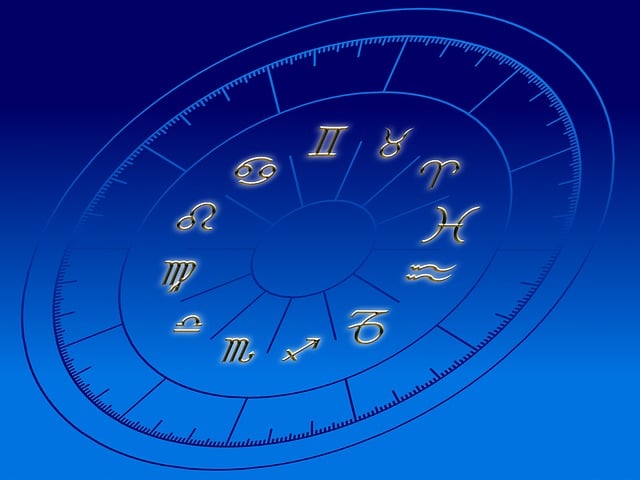
The Babylonians divided the sky into twelve equal sections of thirty degrees each, naming each section after a constellation that appeared within it. These became the twelve zodiac signs we know today: Aries, Taurus, Gemini, Cancer, Leo, Virgo, Libra, Scorpio, Sagittarius, Capricorn, Aquarius, and Pisces. Initially, the zodiac served not as a personal tool for self-reflection but as a method of predicting events of great importance to kings and nations, such as agricultural cycles or the outcomes of wars.
The Influence of Ancient Greece
The Greeks inherited the Babylonian zodiac and integrated it into their own philosophical and mathematical framework. During the Hellenistic period, Greek scholars transformed astrology into a more structured system. They emphasized the importance of planetary positions, aspects, and houses, creating a more detailed method for interpreting the heavens.
It was also during this era that astrology became more personal. Instead of focusing solely on rulers and empires, astrologers began casting natal charts for individuals, linking the positions of the stars and planets at the time of birth to personality traits and life events. This shift marked the beginning of astrology as we know it today—something that could offer guidance to anyone, not just those in power.
Greek philosophers like Ptolemy played a pivotal role in shaping astrological thought. In his work Tetrabiblos, Ptolemy laid out a framework for astrology that connected it with the principles of natural science as understood at the time. His ideas established astrology as an intellectual discipline, even as it retained its mystical qualities.
Astrology in the Medieval and Renaissance Eras
During the Middle Ages, astrology flourished in the Islamic world, where scholars translated Greek texts and expanded upon them. These scholars refined the zodiac and introduced advanced mathematical techniques to improve chart calculations. Astrology was deeply respected, often used in medicine, agriculture, and political decision-making.
In medieval Europe, astrology became part of the curriculum at universities. Physicians studied it to determine the best times for treatments, while architects used it to plan the construction of cathedrals and cities in harmony with celestial patterns. Astrology and astronomy were still closely connected, with both disciplines relying on careful observation of the stars.
By the Renaissance, astrology reached the height of its influence. Even prominent scientists like Johannes Kepler practiced astrology, blending their astronomical knowledge with astrological principles. Kepler saw astrology as an imperfect but insightful tool for understanding human behavior, even as he helped lay the groundwork for modern astronomy.

The Scientific Revolution and Astrology’s Decline
The 17th century brought a major turning point. As the Scientific Revolution gained momentum, astronomy and astrology began to separate. Advances in mathematics, physics, and observation revealed a universe governed by natural laws rather than symbolic ones. The heliocentric model, proposed by Copernicus and confirmed by Galileo’s telescope, displaced Earth from the center of the cosmos and weakened the traditional astrological worldview.
Astrology gradually lost its academic standing, and by the 18th century, it was largely dismissed by the scientific community. However, while it was no longer regarded as a scholarly pursuit, astrology did not disappear. Instead, it adapted, finding new life outside of formal institutions.
Astrology in the Modern Era
The 19th and 20th centuries saw astrology undergo another transformation. With the rise of psychology and individualism, astrology shifted its focus from predicting external events to exploring personal identity and inner potential. Carl Jung, the Swiss psychologist, described astrology as a tool for understanding archetypes and the human psyche, giving it a renewed sense of relevance.
The popularization of the newspaper horoscope in the early 20th century brought astrology into the mainstream. While simplified compared to traditional chart readings, these daily and weekly horoscopes introduced millions of people to the idea of zodiac signs and their supposed influence on personality and daily life.
In recent decades, astrology has continued to evolve. The internet has given rise to personalized online charts, apps, and social media communities, where people share their astrological insights and experiences. Astrology has become more accessible than ever, blending traditional methods with modern technology to create a personalized and engaging experience for those who seek guidance from the stars.
The Enduring Appeal of the Zodiac
Despite centuries of scientific advancement, astrology remains a powerful cultural force. For many, it offers comfort, meaning, and a sense of connection to something larger than themselves. While its methods and interpretations may have changed, the zodiac has retained its central role in helping people navigate life’s uncertainties.
From its ancient beginnings in Babylon to its digital renaissance today, astrology has survived not because it is unchanging, but because it adapts. It has shifted from predicting the fate of nations to helping individuals better understand their own lives. In a world that often feels chaotic and unpredictable, the zodiac continues to provide a symbolic map of the human experience, guiding those who look up at the night sky and wonder what it all means.
Thank you for visiting our site. We hope you are finding fun and entertaining information. If you have any comments or questions please contact us today. We also ask that you visit our sponsor Wichita Falls Parking Lot Striping.