From Astrology to Astronomy: The Evolution of Human Fascination with the Cosmos
For thousands of years, the night sky has inspired awe, wonder, and curiosity in every civilization. The sight of glittering stars, wandering planets, and celestial patterns has sparked myths, guided explorers, and ignited the pursuit of knowledge.
Article Sponsored by: Parking Lot Striping Services Jacksonville
What began as a spiritual and symbolic connection to the heavens gradually evolved into a scientific quest to understand the universe. From astrology to astronomy, humanity’s relationship with the cosmos has been a journey of imagination, belief, and discovery.
While modern astronomy and ancient astrology are now viewed as distinct disciplines—one based in empirical science and the other in symbolic interpretation—they share a common origin. Both emerged from the human desire to find meaning in the skies and to understand how the movements of celestial bodies relate to life on Earth. The evolution from astrological traditions to astronomical science reveals not only our changing views of the universe but also the enduring power of cosmic fascination.
The Ancient Origins of Celestial Study
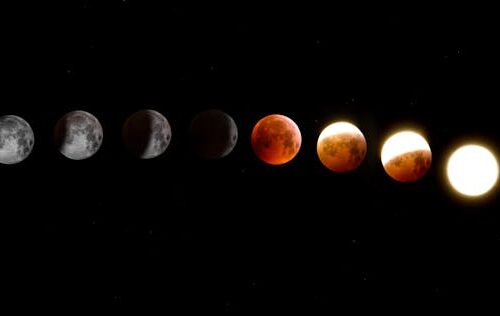
Long before telescopes or scientific theories, early humans noticed patterns in the sky. They saw the regular rising and setting of the Sun, the phases of the Moon, and the movement of stars across the night sky. These observations were not just practical—they held deep cultural and spiritual significance.
Ancient civilizations believed that the heavens were a divine realm. The sky was thought to be filled with gods, omens, and messages meant for humanity. In Mesopotamia, astrologer-priests tracked planetary motions and lunar cycles to make predictions about harvests, wars, and the fates of kings. These early sky-watchers created star charts, documented eclipses, and developed zodiac systems that would influence cultures across the world.
The Egyptians aligned their temples and pyramids with the stars, most notably Sirius, whose annual appearance signaled the flooding of the Nile. In China, court astronomers recorded solar and lunar events, believing that these phenomena reflected the balance—or imbalance—of cosmic forces within the empire. For the Maya and the Aztecs, celestial calendars were vital tools for agriculture, ritual, and prophecy.
In these ancient societies, the study of the stars was a blend of spirituality, divination, and observation. Astrology was not merely entertainment or personal insight—it was a respected and essential part of governance, religion, and daily life.
The Rise of Greek Thought and the Separation of Ideas
It was in ancient Greece that the first major shift occurred in the way people understood the cosmos. Philosophers began to explore natural explanations for celestial phenomena, seeking rational, observable laws behind the movement of the stars and planets.
Thinkers like Pythagoras and Plato believed that the universe operated according to mathematical principles. This idea laid the foundation for a more analytical approach to studying the heavens. Aristotle proposed a geocentric model in which Earth stood at the center of a perfectly ordered cosmos. This model, later expanded by Claudius Ptolemy in his Almagest, remained the dominant astronomical framework for over a thousand years.
Despite this growing interest in physical explanations, astrology and astronomy were still closely linked. Astrologers used planetary positions to interpret fate, while astronomers refined the tools needed to calculate those positions. Both practices relied on a shared understanding of the sky—one focused on meaning, the other on measurement.
Medieval Astronomy and the Preservation of Knowledge
During the Middle Ages, much of the classical knowledge of astronomy and astrology was preserved and expanded by Islamic scholars. In cities like Baghdad and Córdoba, scientists translated Greek texts and built upon them with new observations and mathematical methods.
Figures like Al-Battani and Al-Zarqali made precise calculations of planetary movements, while others, such as Avicenna and Al-Farabi, examined the philosophical relationship between the heavens and human life. Astrology remained a respected discipline, with astrological charts often created for rulers and major events.
In medieval Europe, astrology was taught in universities alongside astronomy. Physicians used astrological charts to diagnose illnesses and determine the most auspicious times for treatments. Although the Church occasionally viewed astrology with suspicion, it was widely practiced and accepted by scholars and clergy alike.
The Scientific Revolution and the Birth of Modern Astronomy
The real divergence between astrology and astronomy came with the Scientific Revolution. As new instruments and methods emerged, the focus shifted from symbolic interpretation to empirical observation and experimentation.
Nicolaus Copernicus challenged the geocentric model with his revolutionary heliocentric theory, placing the Sun at the center of the solar system. Galileo Galilei, using a telescope, observed the moons of Jupiter and the phases of Venus, offering direct evidence that not all celestial bodies revolved around Earth. Johannes Kepler formulated laws of planetary motion, and Isaac Newton’s law of universal gravitation provided a mathematical explanation for those movements.
These discoveries marked the transformation of astronomy into a rigorous science. While astrology remained popular among the general public, it was increasingly seen by the scientific community as lacking empirical support. The division between astronomy and astrology became more pronounced, with astronomy gaining recognition as a legitimate field of study and astrology gradually shifting into the realm of mysticism and personal belief.
The Enduring Human Connection to the Cosmos
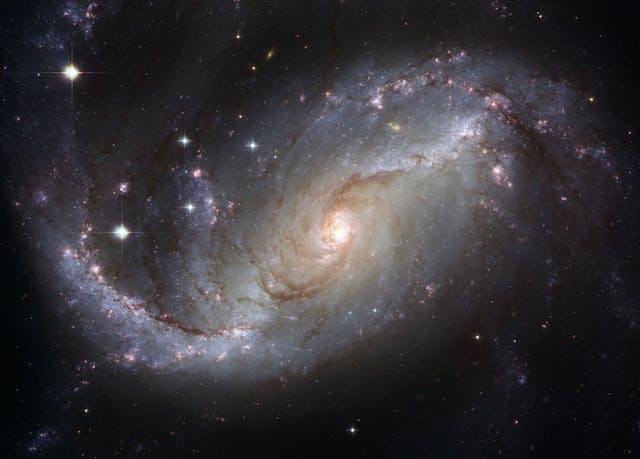
Despite the separation of astrology and astronomy, the human fascination with the cosmos remains as strong as ever. Modern astronomy has unlocked breathtaking insights into the nature of the universe—from the birth of stars and galaxies to the possibility of life on other planets. Through powerful telescopes and space missions, we continue to explore the mysteries of the cosmos with a sense of wonder and awe.
At the same time, astrology has seen a resurgence in popular culture. Many people still turn to birth charts and horoscopes as tools for self-reflection, comfort, and connection. While astrology is no longer considered a science, it still serves a symbolic and emotional role in people’s lives, offering meaning in a complex world.
The transition from astrology to astronomy does not represent the abandonment of ancient wisdom, but rather the evolution of our understanding. What began as a spiritual and symbolic relationship with the stars has grown into a scientific exploration of the universe. Yet, both paths reflect a fundamental truth: we are drawn to the sky not only to understand it but to understand ourselves.
A Journey of Curiosity and Wonder
The history of astrology and astronomy is a story of human curiosity—our desire to find meaning in the cosmos and to unravel the mysteries of existence. From ancient astrologers charting the movements of the planets to modern astronomers peering into the depths of space, the stars have always called to us.
Though the tools and perspectives have changed, the inspiration remains. Whether seeking answers in the symbolic patterns of astrology or the data-driven discoveries of astronomy, our fascination with the cosmos is ultimately a reflection of something deeply human—a yearning to connect with the vast, beautiful universe we call home.
Thank you for visiting our site. We hope you are finding good information and enjoy reading our articles. If you have any comments or questions please contact us today. We also ask that you visit our sponsor for the best parking lot striping in Jacksonville.